Introduction
Compaction is a critical stage in road construction, pavement development, site preparation, and infrastructure projects. Poorly compacted soil or asphalt can affect the stability and performance of the finished surface.
For contractors working across medium and large construction sites, selecting the right roller can improve productivity and make compaction operations easier to manage.
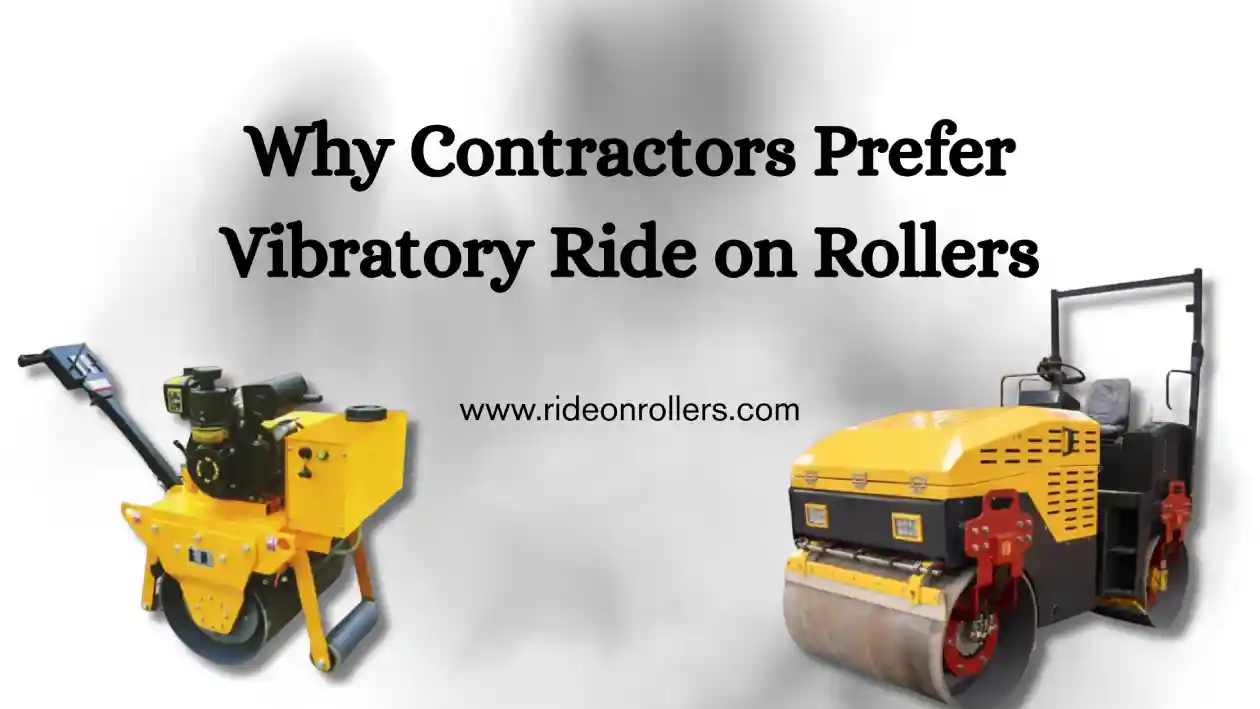
A vibratory ride on roller combines the operating weight of a self-propelled machine with vibration to compact suitable materials efficiently. Unlike walk-behind rollers, the operator controls the machine from a seated position.
Shree Shakti Infratech offers ride-on roller configurations for construction and compaction applications, including models listed with 9 HP engines and different rolling widths.
1. Higher Productivity
One of the main reasons contractors choose ride-on rollers is productivity.
A self-propelled machine can cover larger areas without requiring the operator to manually push or guide the roller.
Productivity depends on:
- Drum width
- Operating speed
- Vibratory force
- Number of passes
- Material type
- Layer thickness
- Site conditions
When properly matched to the application, a ride-on roller can help contractors complete compaction work efficiently.
2. Efficient Vibratory Compaction
Vibration adds dynamic force to the roller drum.
This helps suitable soil, aggregate, and asphalt particles rearrange into a denser structure.
Vibratory rollers can therefore achieve the required compaction more efficiently than relying on static weight alone in appropriate applications.
However, contractors should establish the correct vibration settings, speed, and number of passes based on the material and project specifications.
3. Greater Coverage
Ride-on rollers generally provide greater coverage than smaller pedestrian machines.
A wider rolling width can allow the machine to compact a larger strip during each pass.
This can be valuable for:
- Roads
- Parking areas
- Large paved surfaces
- Industrial sites
- Site development projects
The correct drum width should be selected based on the available working area and access conditions.
4. Reduced Physical Effort
With a walk-behind roller, the operator remains on the ground throughout the operation.
A ride-on roller places the operator in a dedicated driving position.
This can reduce physical effort and make longer compaction operations more manageable.
It can also make frequent forward and reverse movements easier to control.
5. Better Operator Comfort
Construction equipment can operate for several hours a day.
Operator comfort can therefore influence productivity.
A ride-on roller provides:
- Seated operation
- Dedicated controls
- Better machine visibility
- Easier forward and reverse operation
- Reduced walking effort
An ergonomic operating environment can help operators maintain consistent machine control during extended work periods.
6. Suitable for Soil Compaction
Soil compaction is required for many construction activities.
Ride-on vibratory rollers can be considered for suitable applications involving:
- Subgrade preparation
- Road bases
- Embankments
- Site development
- Parking areas
- Foundation-related preparation
The roller should be selected according to soil type, moisture content, layer thickness, and required density.
7. Useful for Asphalt Work
Asphalt requires controlled compaction to achieve the specified surface properties.
Depending on the machine configuration, vibratory ride-on rollers can support asphalt compaction during:
- Road construction
- Pavement work
- Parking-lot construction
- Road repairs
- Surface finishing
The appropriate roller type and operating procedure should be determined according to the asphalt mix and project requirements.
8. Fewer Unnecessary Passes
Effective vibration can help achieve the required density without relying on excessive passes.
The exact number of passes varies according to:
- Material
- Moisture
- Layer thickness
- Roller weight
- Vibratory force
- Operating speed
- Required density
Contractors should use site trials and quality-control measurements to determine the optimal compaction pattern.
Reducing unnecessary passes can help save:
- Fuel
- Machine hours
- Labour time
- Project time
9. Better Control Over Large Work Areas
A ride-on roller can be easier to control across larger sites than manually operated compactors.
The operator can manage:
- Forward movement
- Reverse movement
- Steering
- Speed
- Vibration
This can make it easier to maintain consistent travel patterns across the working area.
10. Suitable for Different Construction Projects
Vibratory ride-on rollers can be considered for several applications, including:
- Road construction
- Asphalt compaction
- Soil compaction
- Parking areas
- Pavement construction
- Industrial site development
- Municipal roadwork
- Repair and maintenance projects
The machine should always be matched to the specific material and application.
Shree Shakti Infratech Ride-On Rollers
Shree Shakti Infratech’s published road-roller range includes several ride-on configurations.
The company’s listings include a Ride On Roller 850 with Greaves Engine, specified with a 9 HP engine, 800 mm rolling width, and a stated operating-speed range of 0–4 km/h. Another listed configuration, the Ride On Roller 1200 with Changfa Engine, is specified with a 9 HP engine and 800 mm rolling width.
A separate published ride-on roller specification lists a 9 HP Greaves engine, 30 kN exciting force, 1,050 kg working weight, and applications including soil and asphalt compaction.
Specifications and availability can vary, so contractors should request the current technical datasheet for the exact model.
Shree Shakti Infratech Ride-On Rollers
Shree Shakti Infratech’s published road-roller range includes several ride-on configurations.
The company’s listings include a Ride On Roller 850 with Greaves Engine, specified with a 9 HP engine, 800 mm rolling width, and a stated operating-speed range of 0–4 km/h. Another listed configuration, the Ride On Roller 1200 with Changfa Engine, is specified with a 9 HP engine and 800 mm rolling width.
A separate published ride-on roller specification lists a 9 HP Greaves engine, 30 kN exciting force, 1,050 kg working weight, and applications including soil and asphalt compaction.
Specifications and availability can vary, so contractors should request the current technical datasheet for the exact model.
What to Ask a Ride On Roller Manufacturer
Before purchasing, contractors should ask about:
- Engine specifications
- Operating weight
- Drum width
- Vibratory force
- Operating speed
- Fuel consumption
- Spare parts
- Warranty
- Maintenance
- Service support
- Delivery schedule
- Customization options
These details make it easier to compare different machines on a total-cost and performance basis.
Why Contractors Consider Shree Shakti Infratech
Shree Shakti Infratech is a New Delhi-based construction-equipment manufacturer and supplier with a published range of road rollers and other construction machinery.
Its roller range includes:
- Ride-on rollers
- Double-drum rollers
- Walk-behind rollers
- Vibratory rollers
The company can be evaluated based on its machine specifications, construction-equipment portfolio, availability, technical support, and spare-parts requirements.
Contractors should compare the current model specifications and quotation against their project requirements before making a purchase.
Conclusion
Contractors prefer vibratory ride-on rollers for many projects because they can combine efficient vibration, self-propelled operation, greater coverage, reduced physical effort, and improved operator control.
They can be useful for soil compaction, asphalt work, road construction, parking areas, pavement projects, and site development when correctly matched to the application.
Before choosing a Ride On Roller Manufacturer, contractors should compare engine power, operating weight, drum width, vibratory force, operating speed, fuel consumption, maintenance requirements, spare-parts availability, and after-sales support.
For businesses evaluating ride-on rollers, Shree Shakti Infratech’s published range provides several configurations that can be assessed according to the size, material, and operating requirements of the project.