Asphalt compaction is one of the most important stages of many road construction and maintenance projects. Proper compaction helps create a stable and uniform surface while supporting the overall quality of the finished work.
While large ride-on rollers are commonly used for highways, major roads, and large paving projects, many construction jobs involve smaller areas where large equipment may not be the most practical choice. In such situations, walk behind rollers are often used because they provide mobility, accessibility, and effective compaction for confined work zones.
Walk behind rollers are widely used for asphalt patching, road repairs, parking areas, pathways, footpaths, residential roads, driveways, utility reinstatement work, and other smaller paving applications.
For contractors handling compact asphalt projects, understanding the advantages of walk behind rollers can help determine whether this type of equipment is suitable for the job.
What Is a Walk Behind Roller?
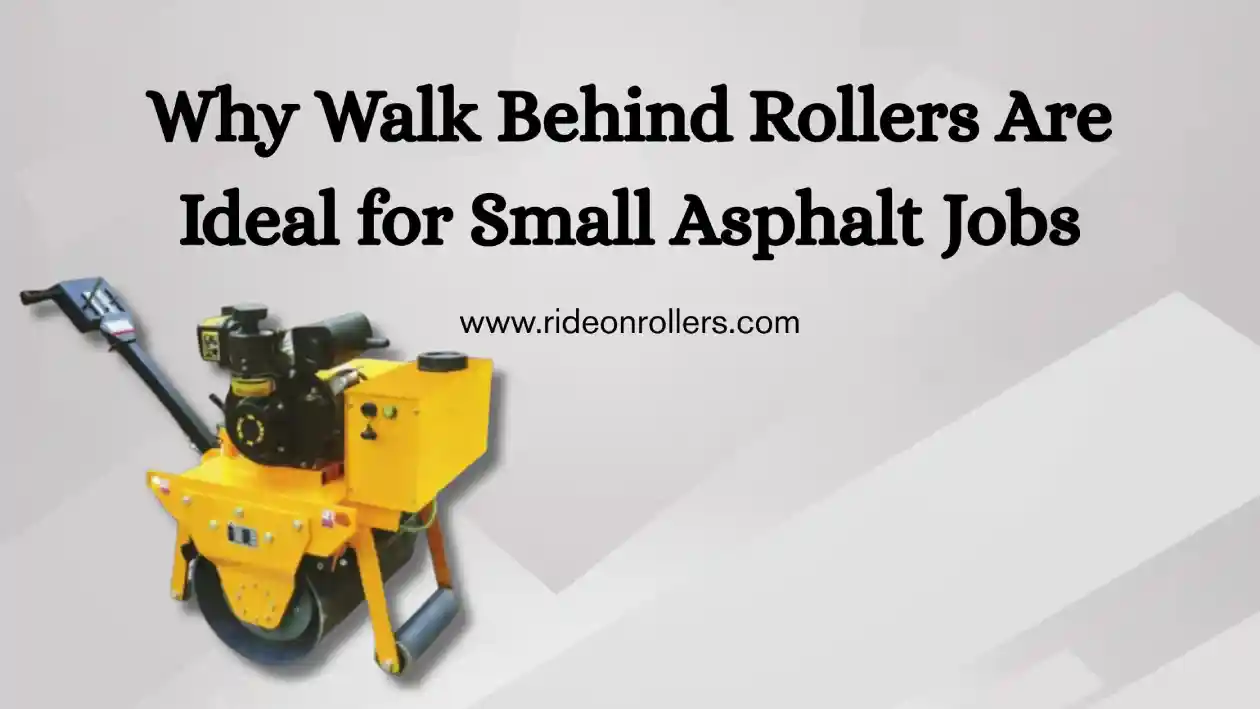
A walk behind roller is a compact compaction machine operated by an individual walking behind the equipment.
Unlike larger ride-on rollers, the operator controls the machine using a handle and control system while remaining on the ground.
Walk behind rollers are available in single-drum and double-drum configurations and may include vibratory compaction systems depending on the model.
Their compact size allows them to work in areas where larger rollers may have limited access.
Why Small Asphalt Jobs Need Different Equipment
Not every asphalt project involves large road sections.
Many contractors regularly work on:
- Asphalt repair patches
- Parking areas
- Residential roads
- Footpaths
- Walkways
- Driveways
- Utility reinstatement work
- Service roads
- Landscaping projects
- Small commercial developments
In these situations, a large ride-on roller may not always be practical because of space limitations, transportation requirements, project size, and operating conditions.
Walk behind rollers offer an alternative that is often better suited to these smaller work areas.
1. Easy to Use in Confined Areas
One of the biggest advantages of a walk behind roller is its ability to operate in restricted spaces.
Many asphalt repair projects take place in areas where space is limited by:
- Existing buildings
- Curbs
- Barriers
- Parked vehicles
- Landscaping features
- Utility structures
- Pedestrian pathways
The compact dimensions of a walk behind roller allow contractors to access these areas more easily than larger compaction equipment.
This makes them particularly useful for urban maintenance projects and localized asphalt repairs.
2. Suitable for Asphalt Repair Work
Road repair and maintenance often involve relatively small asphalt patches rather than complete resurfacing projects.
For these applications, contractors may only need to compact a limited area.
Using a large roller for a small repair zone may not be practical from a logistical or operational perspective.
A walk behind roller can often provide the necessary compaction while remaining easier to transport and position at the repair location.
3. Easier Transportation Between Job Sites
Many contractors perform multiple small jobs during a single day.
Equipment that is easy to transport can therefore be a significant advantage.
Compared with larger rollers, walk behind rollers generally require less transport space and can be moved more easily between smaller project locations.
This can be beneficial for contractors involved in municipal maintenance, utility reinstatement, road repairs, and small commercial projects.
4. Practical for Residential and Commercial Projects
Smaller asphalt projects are common in residential and commercial construction.
Examples include:
- Residential roads
- Housing developments
- Driveways
- Parking areas
- Commercial entrances
- Internal access roads
- Footpaths
- Walkways
These projects may not justify the use of larger compaction equipment.
A walk behind roller often provides a practical solution while still allowing contractors to carry out the required compaction work.
5. Improved Access Around Obstacles
Construction sites frequently contain obstacles that make machine movement more challenging.
Examples include:
- Drainage structures
- Utility covers
- Landscaping features
- Lighting poles
- Signage
- Existing buildings
- Curbs
The compact design of a walk behind roller allows operators to work closer to these features while maintaining better control of the machine.
This can be particularly useful for detailed compaction work around site boundaries and finished structures.
6. Useful for Pathways and Footpaths
Walk behind rollers are commonly used for pathways, pedestrian routes, cycle tracks, footpaths, and landscaping projects.
These areas often have width restrictions that make larger rollers impractical.
The smaller footprint of a walk behind roller allows contractors to compact asphalt surfaces in these environments more effectively.
This versatility makes the equipment useful across a wide range of construction and maintenance applications.
7. Efficient for Small-Scale Asphalt Projects
Project size plays an important role in equipment selection.
For a large highway project, a high-capacity ride-on roller may be necessary.
For a small parking area, driveway, or repair patch, however, a walk behind roller may be more appropriate.
Using equipment that matches the scale of the project can help contractors manage resources more effectively while maintaining productivity.
The objective is to select equipment suitable for the work area rather than automatically choosing the largest available machine.
8. Better Manoeuvrability
Manoeuvrability is an important consideration on smaller projects.
The operator of a walk behind roller can often reposition the machine more easily in confined spaces and around obstacles.
This can be useful when compacting irregularly shaped asphalt sections or working within restricted construction zones.
The ability to make controlled movements can help improve access to difficult areas that may otherwise be challenging to compact.
9. Suitable for Municipal Maintenance Projects
Municipal authorities and contractors frequently carry out maintenance work involving smaller asphalt areas.
Examples include:
- Road patch repairs
- Utility trench reinstatement
- Sidewalk repairs
- Local road maintenance
- Public-space improvements
Walk behind rollers are commonly used for these types of projects because they are suited to compact work zones and localized compaction requirements.
Their size can also simplify deployment in busy urban areas.
10. Useful for Utility Reinstatement Work
Utility installations often require excavation followed by reinstatement of the surface.
After the asphalt has been replaced, compaction is necessary.
These work zones are often relatively small and may be located in narrow roads or urban environments.
Walk behind rollers can provide practical access for compacting these reinstated sections without requiring large equipment.
11. Can Support Consistent Compaction
Compaction quality depends on many factors, including material condition, layer thickness, operating technique, equipment selection, and project specifications.
A walk behind roller provides contractors with equipment designed specifically for compaction work in smaller areas.
When used according to project requirements and manufacturer recommendations, it can contribute to the compaction process on small asphalt jobs.
Contractors should always follow applicable project specifications and engineering requirements.
Walk Behind Roller vs Larger Ride-On Roller
Both machine types have their place in construction.
Walk Behind Roller
Often used for:
- Asphalt patch repairs
- Footpaths
- Small parking areas
- Driveways
- Utility reinstatement
- Landscaping projects
- Confined spaces
Ride-On Roller
Often used for:
- Highways
- Major road construction
- Large commercial developments
- Airports
- Industrial paving projects
- Extensive asphalt surfaces
The choice should be based on project size, site conditions, accessibility, and compaction requirements.
Factors to Consider When Choosing a Walk Behind Roller
Before selecting a walk behind roller, contractors should consider:
- Project size
- Asphalt area dimensions
- Site accessibility
- Surface conditions
- Drum configuration
- Vibratory requirements
- Transportation needs
- Maintenance requirements
- Operator experience
The machine should be matched to the actual conditions of the project rather than selected solely on the basis of price or dimensions.
Why Equipment Quality Matters
Like any construction equipment, a walk behind roller should be durable, practical to operate, and suitable for the intended application.
Contractors should evaluate:
- Construction quality
- Drum design
- Control layout
- Ease of maintenance
- Service support
- Spare-parts availability
- Manufacturer experience
Choosing equipment from an experienced Ride on Roller Manufacturer can help businesses access product support and equipment suited to construction environments.
Shree Shakti Infratech – Construction Equipment Manufacturer
Shree Shakti Infratech manufactures construction equipment including walk behind rollers, vibratory rollers, plate compactors, tamping rammers, concrete mixers, and other construction machinery.
The company’s equipment is designed for applications across road construction, asphalt compaction, site preparation, infrastructure development, and general construction projects.
Contractors evaluating a walk behind roller should consider the nature of their projects, working conditions, compaction requirements, and operational needs before selecting equipment.
Conclusion
Walk behind rollers are widely used for small asphalt jobs because they provide practical compaction capabilities in areas where larger rollers may not be the most efficient solution.
Their compact size, manoeuvrability, accessibility, and suitability for confined work zones make them useful for asphalt repairs, pathways, parking areas, driveways, utility reinstatement projects, residential developments, and municipal maintenance work.
While large ride-on rollers remain essential for major paving projects, smaller asphalt applications often benefit from equipment specifically designed for compact work environments.
For contractors handling localized asphalt work, selecting the right compaction equipment can improve site accessibility, simplify transportation, and support efficient project execution.
Working with an experienced Ride on Roller Manufacturer can also help businesses choose equipment that aligns with their project requirements and operational goals.