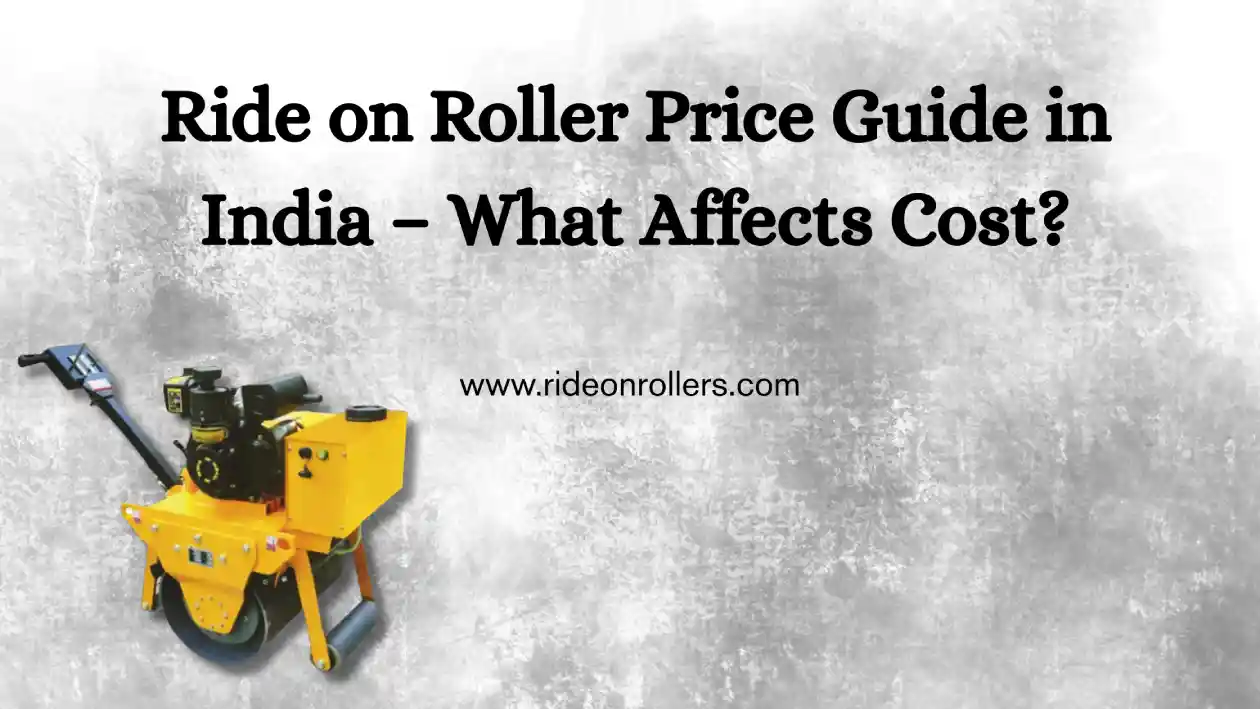
The price of a ride on roller in India can vary significantly depending on the machine’s configuration, size, application, specifications, manufacturer, and support services.
For contractors and construction companies, price is naturally an important consideration. However, choosing a roller based only on the lowest quoted price can sometimes lead to higher operating costs, limited productivity, or difficulties with maintenance and spare parts.
A better approach is to understand what determines the price of a ride on roller and compare machines according to their actual project requirements.
Ride on rollers are commonly used for soil preparation, road construction, asphalt compaction, parking areas, industrial projects, commercial developments, and infrastructure work. Different applications require different machine configurations, which is why there is no single price that applies to every roller.
This guide explains the major factors that influence ride on roller prices in India and what buyers should consider before making a purchase.
What Is a Ride on Roller?
A ride on roller is a self-propelled compaction machine operated by an operator from the machine.
It is designed to compact suitable construction materials such as soil, aggregate, road base, and asphalt.
Compared with walk-behind rollers, ride on machines are generally intended for larger working areas where contractors require greater coverage and operator-controlled movement.
Depending on the model, ride on rollers may be used for:
- Road construction
- Asphalt paving
- Soil compaction
- Parking areas
- Industrial roads
- Commercial projects
- Residential developments
- Infrastructure projects
- Road repair and rehabilitation
Because the requirements vary between these applications, machine prices can also vary.
Why Ride on Roller Prices Vary in India
When comparing quotations from different suppliers, buyers may notice significant differences between machines that appear similar.
This can happen because the quoted price may reflect differences in:
- Machine size
- Operating weight
- Engine
- Drum configuration
- Vibration system
- Working width
- Machine construction
- Components
- Brand and manufacturing quality
- Warranty
- After-sales service
- Spare-parts support
Therefore, buyers should compare the complete machine specification and ownership value, rather than looking only at the initial price.
1. Machine Size Affects Price
One of the most obvious factors affecting ride on roller cost is machine size.
Compact rollers generally require fewer materials and smaller components than larger machines. Heavy-duty rollers designed for major infrastructure projects may have larger frames, drums, engines, and supporting systems.
A compact machine may be appropriate for:
- Residential roads
- Small parking areas
- Urban construction
- Commercial sites
- Smaller asphalt projects
Larger machines can be more suitable for:
- Highways
- Large roads
- Industrial infrastructure
- Major commercial developments
- Extensive asphalt projects
The right choice should depend on the contractor’s regular workload.
Buying a larger machine simply because it offers more capacity can increase the purchase price and operating costs without providing additional value on smaller projects.
2. Operating Weight Influences Cost
Operating weight is another important factor.
Heavier rollers may require stronger structural components and larger supporting systems.
However, a higher operating weight does not automatically mean a better machine.
The required weight depends on:
- Material type
- Soil condition
- Layer thickness
- Asphalt application
- Required compaction
- Project specifications
A contractor should select operating weight according to the intended application.
This can help avoid spending more on equipment that is unnecessarily large for the work being performed.
3. Engine and Power
The engine is another component that contributes to the overall machine cost.
Engine selection can affect the roller’s ability to perform under different operating conditions.
Buyers should consider:
- Engine power
- Fuel type
- Fuel efficiency
- Availability of service
- Availability of replacement parts
- Operating environment
A higher-powered engine may increase the price, but contractors should first determine whether the additional capacity is actually required.
The engine should be evaluated as part of the complete machine rather than as an isolated specification.
4. Drum Configuration
Drum configuration can also influence the price.
Depending on the application, buyers may encounter single-drum and double-drum ride on rollers.
Double-drum configurations can be particularly useful for certain asphalt and surface-compaction applications.
A single-drum configuration may be more suitable for particular soil or road-base applications depending on the machine design.
The choice should be based on the material and project requirements.
Contractors should not pay extra for a configuration that they do not actually need.
5. Vibration System
Many modern rollers use vibration to improve compaction performance.
The vibration system can influence machine design and overall cost.
Depending on the equipment, buyers may need to consider vibration settings, drum operation, and the intended application.
For contractors working mainly on soil or asphalt, the vibration system should be appropriate for those materials and the required construction procedure.
The machine should be operated according to the manufacturer’s recommendations and project specifications.
6. Working Width
Working width determines how much surface the roller can cover during each pass.
A wider drum can be useful for large open areas because it can cover more surface during the planned rolling operation.
However, wider machines can also be less convenient in restricted areas.
Contractors working in urban environments or on smaller sites may prefer a more compact configuration.
Therefore, working width can affect both the machine price and its practical value.
7. Application and Machine Configuration
The intended application can influence the equipment configuration and, consequently, the price.
A roller designed for general construction work may have a different configuration from one intended for specialized asphalt operations.
Before requesting quotations, contractors should clearly communicate whether the machine will be used for:
- Soil compaction
- Road-base preparation
- Asphalt compaction
- Parking areas
- Industrial sites
- Mixed applications
This helps suppliers recommend equipment appropriate to the actual work.
8. Build Quality and Components
Two rollers with similar basic specifications may have different prices because of differences in construction quality and components.
Buyers should evaluate:
- Frame construction
- Drum quality
- Hydraulic components
- Engine
- Electrical system
- Bearings
- Controls
- Fasteners
- Overall manufacturing quality
A low initial price may not provide good value if components wear quickly or replacement parts are difficult to obtain.
For commercial contractors, durability and serviceability can be more important than a small difference in purchase price.
9. Manufacturer Reputation
The manufacturer can have a significant influence on the price.
An established manufacturer may invest in:
- Product development
- Quality control
- Manufacturing processes
- Technical support
- Spare-parts inventory
- After-sales service
Buyers should therefore compare the reputation and support offered by manufacturers rather than comparing price alone.
A reliable Ride on Roller Manufacturer can also help contractors select a suitable machine configuration instead of simply selling the highest-priced model.
10. Warranty and After-Sales Support
The quoted price may also reflect the support provided after purchase.
Important factors include:
- Warranty terms
- Service support
- Spare-parts availability
- Technical assistance
- Maintenance guidance
- Response time
For contractors using a roller regularly, after-sales support can have a significant effect on the machine’s long-term value.
A cheaper machine may become expensive if obtaining technical assistance or replacement components is difficult.
11. Spare-Parts Availability
Construction equipment operates in demanding conditions.
Components may eventually require replacement due to normal wear or operating conditions.
Before buying, ask the supplier about the availability of commonly required parts.
These may include:
- Filters
- Belts
- Bearings
- Seals
- Hydraulic components
- Electrical components
- Engine parts
- Vibration-system components
Easy access to spare parts can help reduce downtime and keep projects moving.
12. Transportation Costs
The purchase price is not the only transportation-related expense.
After purchasing the roller, contractors may need to transport it between project sites.
Transportation costs can depend on:
- Machine weight
- Machine dimensions
- Distance
- Trailer requirements
- Loading arrangements
A compact roller may be easier and less expensive to transport between urban sites, while a heavier machine may require more substantial transportation planning.
Buyers should include these costs when calculating the overall investment.
13. Customization and Additional Features
Some buyers may require specific machine configurations or additional features.
Depending on the manufacturer, customization can affect the final price.
For example, a contractor may require a particular:
- Drum configuration
- Operating arrangement
- Engine option
- Control system
- Machine specification
Before ordering, buyers should confirm exactly which features are included in the quoted price.
This avoids confusion when comparing quotations from different suppliers.
14. New vs Used Ride on Roller
The condition of the equipment is another major factor.
A new ride on roller will generally have a higher initial purchase price than a used machine.
Used equipment may appear attractive to contractors with limited budgets, but buyers should carefully inspect:
- Engine condition
- Drum condition
- Hydraulic systems
- Vibration system
- Frame
- Controls
- Maintenance history
- Operating hours
A low-cost used machine can become expensive if significant repairs are required.
For businesses relying on equipment for regular commercial work, the total ownership cost should be considered carefully.
Typical Price Ranges: Why Buyers Should Be Careful
It can be tempting to search online for a single “ride on roller price in India.”
However, online prices may not always be directly comparable.
Different listings may represent different:
- Machine sizes
- Configurations
- Brands
- Specifications
- Manufacturing standards
- Warranty conditions
- Delivery arrangements
Some listings may also exclude transportation, taxes, or additional equipment requirements.
For this reason, buyers should request a detailed quotation based on a specific machine configuration.
The most useful comparison is machine-to-machine, not simply price-to-price.
Shree Shakti Infratech – Ride on Roller Manufacturer in India
Shree Shakti Infratech is a New Delhi-based construction equipment manufacturer offering ride on rollers and other construction machinery.
Its published range includes ride on rollers, walk-behind rollers, vibratory earth compactors, plate compactors, tamping rammers, concrete mixers, and other equipment used in construction and infrastructure applications.
The company’s published ride on roller listings include different configurations, allowing contractors to evaluate machines according to project requirements.
One published ride on roller specification includes a 9 HP engine, approximately 1,050 kg working weight, front and rear wheel widths of 750 mm and 800 mm, and stated applications for soil and asphalt compaction.
Because equipment specifications, availability, and commercial terms can change, buyers should confirm current pricing and specifications directly with the manufacturer before making a purchasing decision.
For contractors considering bulk procurement, discussing project size, material type, expected workload, transportation, and service requirements with the manufacturer can help identify an appropriate machine.
Conclusion
The ride on roller price in India depends on much more than the machine’s basic size.
Engine, operating weight, drum configuration, vibration system, working width, construction quality, manufacturer, warranty, spare-parts availability, transportation, and after-sales support can all influence the final cost.
Contractors should therefore avoid choosing equipment based only on the lowest quotation.
The better approach is to first understand the project’s requirements and then compare machines that offer the appropriate specifications and support.
For small projects, a compact roller may provide better value because it is easier to manoeuvre and transport. For major infrastructure and road projects, a larger machine may justify the additional investment through greater working capacity and productivity.
Choosing an experienced Ride on Roller Manufacturer can also help buyers evaluate different configurations and understand the long-term costs associated with ownership.
For current pricing, specifications, availability, and commercial terms, contractors should contact Shree Shakti Infratech directly and request a quotation based on their specific project requirements.