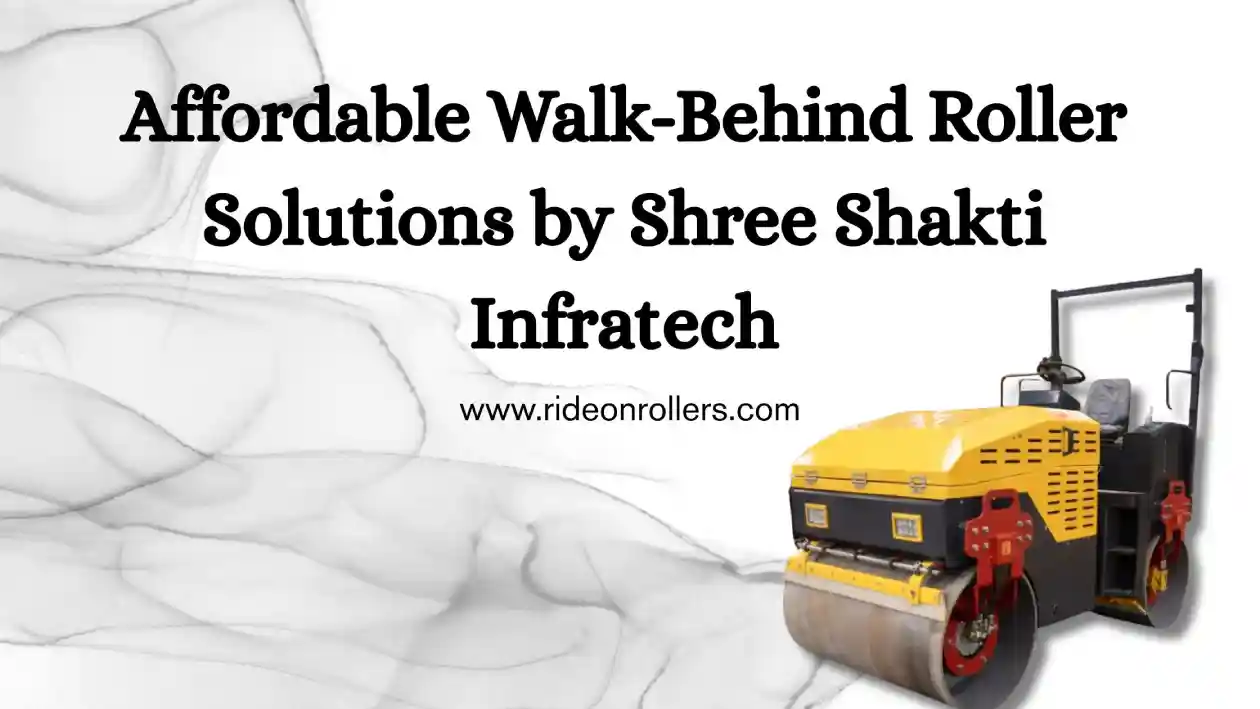
Introduction
Compaction is essential for creating stable road bases, paved surfaces, pathways, parking areas, and construction sites. For contractors working on smaller or confined projects, a walk-behind roller can provide a practical alternative to larger ride-on road rollers.
Walk-behind rollers are compact, relatively easy to maneuver, and designed for applications where a larger machine may be unnecessary or difficult to operate.
Shree Shakti Infratech offers several walk-behind and pedestrian roller configurations, including single-drum and double-drum models. Its published product listings also show different engine powers, drum widths, operating weights, and price points, allowing buyers to select equipment according to their project requirements.
Why Choose a Walk-Behind Roller?
A walk-behind roller can be particularly useful when a project requires compact equipment rather than a full-size road roller.
Key advantages include:
- Compact machine size
- Easier maneuverability
- Lower initial investment for suitable applications
- Reduced space requirements
- Suitable for smaller construction sites
- Useful for soil and asphalt compaction
- Easy access to relatively confined work areas
The correct model should always be selected according to the material, required compaction, working area, and project specifications.
2. Single-Drum Walk-Behind Rollers
Single-drum rollers are suitable for many compacting applications where a narrow machine footprint is beneficial.
Shree Shakti Infratech’s published SSI-SMT-600 walk-behind single-drum roller is listed with:
- 5 HP engine
- 0–3 km/h maximum working speed
- 425 × 600 mm drum dimensions
- 600 mm rolling width
- Petrol Honda engine configuration
The company’s separate single-drum vibratory road roller listing specifies a 6.5 HP engine and a 425 × 600 mm drum.
Because the website contains multiple configurations, buyers should confirm the exact model and specification in the quotation.
3. Double-Drum Walk-Behind Rollers
Double-drum machines can provide compaction through both front and rear drums.
They can be useful for suitable:
- Soil-compaction work
- Asphalt applications
- Road repairs
- Pathways
- Parking areas
- Paving projects
Shree Shakti Infratech lists a VR6500 Double Drum Walk Behind Roller with a 700 kg operating weight, 650 mm drum width, 9 HP diesel engine, electric start, 0–4 km/h travel speed, and soil and asphalt applications.
Another published SMT-S600 double-drum configuration specifies a 600 mm drum width, 10 HP engine, and 0–4 km/h maximum working speed.
4. Compact Size for Restricted Work Areas
Large road rollers are not always practical for smaller sites.
A walk-behind roller can be easier to operate around:
- Narrow roads
- Footpaths
- Small parking areas
- Building surroundings
- Landscaping projects
- Utility work
- Repair sections
Its compact footprint can allow contractors to work in locations where larger ride-on equipment has limited access.
5. Useful for Soil Compaction
Walk-behind rollers can support suitable soil and granular-material applications.
Potential uses include:
- Subgrade preparation
- Small road projects
- Pathway construction
- Backfill areas
- Landscaping
- Parking-area preparation
- Utility trench restoration
The appropriate machine depends on soil type, moisture, layer thickness, and required density.
For example, Shree Shakti Infratech describes one of its double-drum walk-behind roller configurations as intended for soil compaction.
6. Suitable for Asphalt Work
Compact rollers can also be useful for suitable asphalt-compaction applications.
They may be considered for:
- Small road repairs
- Asphalt patching
- Pathways
- Parking areas
- Small paving projects
- Local road maintenance
For asphalt, contractors should consider the roller’s weight, drum configuration, vibration characteristics, operating speed, and water-sprinkling arrangement where required.
7. Lower Space and Transport Requirements
A compact roller can simplify transportation and site logistics.
Compared with larger ride-on machines, smaller pedestrian rollers can be easier to:
- Move between small sites
- Load for transportation
- Store
- Position at confined locations
Transport requirements should nevertheless be checked against the actual machine’s operating weight and dimensions.
8. Simple Operation
Walk-behind rollers are designed around direct operator control.
Depending on the model, controls may include:
- Forward/reverse movement
- Steering
- Vibration
- Engine controls
- Emergency controls
Operators should receive appropriate training and follow the manufacturer’s operating and safety instructions.
Why Consider Shree Shakti Infratech?
Shree Shakti Infratech identifies itself as a construction-equipment manufacturer and lists walk-behind rollers among its product range. Its published website and product pages show single-drum, double-drum, vibratory, and other compaction equipment.
The company also publishes product specifications and indicative pricing for several roller configurations, which can help buyers create an initial comparison.
Before placing an order, buyers should request:
- Latest technical datasheet
- Final quotation
- Applicable taxes and freight
- Warranty terms
- Spare-parts details
- Delivery schedule
- After-sales support information
- Exact engine and model specification
Walk-Behind Roller Maintenance Tips
Regular maintenance can help preserve machine performance and reduce unexpected downtime.
Contractors should:
- Check engine oil regularly.
- Inspect belts and drive components.
- Keep the drum clean.
- Check vibration-system components.
- Inspect fasteners and connections.
- Check fuel and hydraulic systems where applicable.
- Follow recommended service intervals.
- Store the machine in a suitable environment.
- Address unusual vibration or noise promptly.
Maintenance requirements vary by model, so the manufacturer’s manual should be followed.