Introduction
In every successful construction project, proper ground compaction is, honestly, one of the most important steps. Whether it’s road building, commercial development, residential infrastructure, or industrial flooring, the quality of compaction matters a lot for how durable and stable the infrastructure ends up being. That’s where a Ride on Roller becomes this really essential piece of equipment you just can’t ignore.
A Ride on Roller is built to compact soil, gravel, asphalt, and other construction materials efinfrastructure endso reducing manual work and helping the project finish faster. Still, not every roller is right for every job. Different construction sites need different roller types depending on the material, the overall project size, and the compaction depth or level you actually want.
Knowing the different types of Ride on Rollers helps contractors pick the right machinery, boost productivity, and keep the results consistent. In this guide, we’ll go through the various types of Ride on Rollers, what they’re used for, what advantages they bring, and some practical tips for choosing the right machine for your specific work.
What is a Ride on Roller?
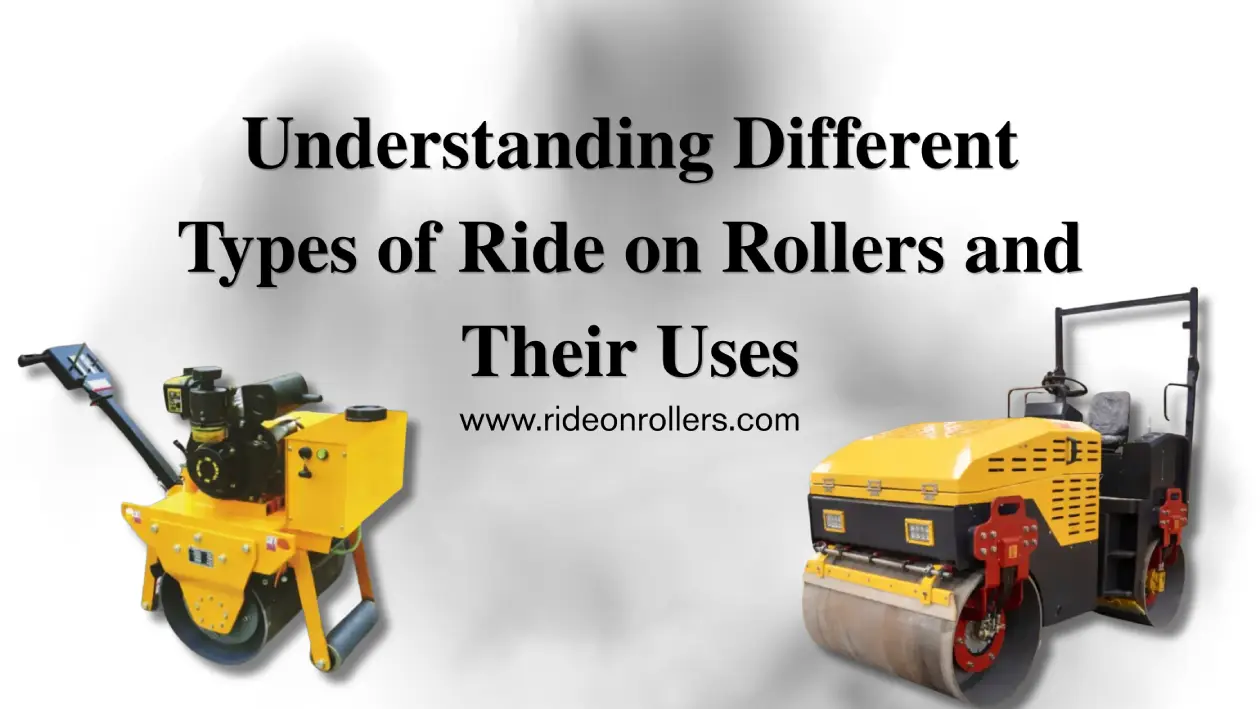
A Ride on Roller is a self-propelled compaction machine operated by a seated driver. Unlike walk-behind rollers, it’s aimed at medium to large construction projects where speed, efficiency, and uniform compaction are basically non-negotiable.
Ride on Rollers work by using their weight, a vibration system, or sometimes both to push out air voids from soil or asphalt. This results in a denser, firmer surface that can carry heavy loads and also resist future settlement issues. Nowadays, these machines show up everywhere, from road construction and highways to airports, industrial sites, parking areas, and large infrastructure projects.
Why Choosing the Right Ride on Roller Matters
Picking the correct Ride on Roller isn’t only about finishing fast; it also affects how the built surface behaves later on. If you use the proper roller, you get more even compaction, fewer upkeep headaches, and a lower risk of cracking or surface breakdown.
Also, the right machine tends to support better fuel efficiency, boost output, and reduce day to day operating costs. When equipment matches the job needs, contractors can push through tasks faster while still keeping strong construction quality standards.
Different Types of Ride on Rollers
Different job sites need different compaction methods. Below you can see the most common Ride on Roller options, plus what they are typically used for.
1. Double Drum Ride on Roller
The Double Drum Ride on Roller is one of the more popular choices for asphalt paving. It has steel drums both at the front and at the rear, so pressure gets spread more evenly across the whole area. Many current units also come with a vibration setup, which helps improve the quality of compaction even more.
This roller is often used during the final stages of road construction because it leaves a smoother and more uniform finish. You’ll also see it on parking lots, airport runways, industrial floors, and even bicycle tracks, especially when surface quality really matters.
The Double Drum Ride on Roller is also valued for its strong maneuverability and its ability to stay consistent over wide paved sections. Contractors like it because it gives speed, good efficiency, and solid surface finishing without needing separate solutions for each part.
Key Benefits
- Uniform asphalt compaction
- Smooth surface finish
- Excellent maneuverability
- High productivity
- Ideal for large paving projects
2. Single Drum Ride on Roller
A Single Drum Ride on Roller has one heavy steel drum up front and pneumatic tires at the back, so you get this kind of steering balance that feels, you know, useful in practice. The setup gives strong traction while also creating high ground pressure, which makes it very effective for soil compaction.
Single Drum Rollers are used a lot before paving even starts. They get the job done by compacting soil, gravel, and other base materials, turning everything into a more stable surface for later construction.
You can typically spot these machines in highway construction, land development, embankment works, dam construction, and broader infrastructure development, where deep soil compaction is really needed.
Because they climb well and still perform reliably on uneven surfaces, Single Drum Ride on Rollers remain one of the most preferred options for earthwork contractors.
Key benefits
- Good soil compaction
- Good grip on rough ground
- Works well for bigger infrastructure projects
- Dependable foundation preparation
3. Vibratory Ride on Roller
A Vibratory Ride on Roller pairs the machine weight with mechanical vibrations to reach a higher compaction density. The vibration system helps drive out trapped air from soil and asphalt, so the result becomes stronger, and it also tends to last longer.
When you compare them with static rollers, vibratory models usually finish the compaction more quickly while still giving better results. They are often used on highways, commercial buildings, and industrial locations and for road repair jobs, where speed and efficiency matter most.
Since they can reduce the number of passes needed to reach proper density, Vibratory Ride on Rollers help contractors cut down on fuel use and day-to-day operating costs, not just at the start but over the full project too.
Key Benefits
- Faster compaction process
- Higher density results
- Reduced project completion time
- Improved fuel efficiency
4. Hydraulic Ride on Roller
The Hydraulic Ride on Roller uses a hydraulic drive system, which basically gives smooth operation, accurate steering, and overall better machine control. These rollers are meant for contractors who want precision, dependable results, and easier operation in real jobs, not just in theory.
With hydraulic systems, you usually end up with less maintenance compared to older mechanical drives, plus performance stays steady even when the conditions are demanding. So, these rollers work well for municipal projects, residential developments, commercial sites, and urban construction, too, where maneuverability matters more than people expect.
And because the controls are straightforward and the operating setup feels comfortable, the machine is more suited for long working hours. That also means reduced operator fatigue, which is kind of a big deal when you are on site all day.
Key Benefits
- Smooth hydraulic operation
- Better machine control
- Lower maintenance requirements
- Comfortable operator experience
5. Static Ride on Roller
A Static Ride on Roller is different from vibratory models; it depends mainly on its own weight to compact the surface. Since it does not generate vibrations, it is a good fit for delicate surfaces, where too much vibration could, say, disturb nearby structures or even mess with material quality.
Static rollers are often used in landscaping projects, decorative paving, light asphalt work, and for surface finishing applications, where control and careful pressure are more important than brute force.
They are not made for deep compaction, but they still work great when the goal is controlled pressure and a clean, high-quality finish that looks right and holds up.
Key Benefits
- Gentle compaction
- Ideal for sensitive surfaces
- Easy operation
- Consistent finishing quality
Common Uses of Ride on Rollers
A Ride on Roller is one of those versatile machines you see a lot in the construction industry. The way it helps compress or “pack” different materials means it works for a pretty wide list of jobs. Sometimes you’ll hear people call it a compaction tool more than a roller, but it does the same kind of job.
In road construction, Ride on Rollers compact asphalt layers so the surface becomes smoother and more durable, and yes, it’s meant to handle heavy traffic. For highway projects, they also prepare strong subgrade bases, which support the whole structure and often lower future repair needs.
You can also find these machines in parking lot construction. When the compaction is uniform, the pavement tends to last longer, and the final look is better. In industrial developments, Ride on Rollers are used on factory floors, in warehouses, and in logistics centers so that those areas can manage heavy machinery and equipment without issues.
Other frequent applications include airport runways, bridge approaches, residential developments, sports grounds, municipal infrastructure, and commercial building works.
How to Choose the Right Ride on Roller
Picking the right Ride on Roller depends on a few key details. If you get these right, you can usually push productivity up while still getting solid compaction results.
First, look at the type of material being compacted. Asphalt work often matches best with a Double Drum Ride on Roller, while soil and gravel tend to be handled better with a Single Drum model or a vibratory configuration. That difference matters more than people think.
Next, consider project size and site layout. Bigger projects benefit from wider drums and higher-capacity units, because efficiency improves when you cover more ground per pass. Compact rollers, on the other hand, fit better in confined areas and smaller construction zones.
Contractors should also check engine output, vibration frequency, fuel efficiency, maintenance needs, operator comfort, and the quality of after-sales service before buying. Invest in the right specs instead of just the cheapest machine, and you’ll feel it later when the work stays consistent and on schedule.
Benefits of Using a Ride on Roller
Using a top-quality Ride on Roller gives you advantages that go beyond basic compaction. It helps the whole job move along quicker, the build quality feels more solid, and over time, you can see real cost savings, too. Not just “it compacts,” but it does it in a steadier way that matters.
Some of the main good parts are like this:
- Faster project completion
- Better compaction results
- Less labor cost
- Lower fuel use
- More operator comfort
- Stronger surface staying power
- Longer equipment life
- Higher productivity
- Fewer maintenance costs
- Better return on investment
Why Choose Ride on Roller?
When you are putting money into construction equipment, reliability and performance are a big deal. Ride on Roller stays focused on delivering solid, dependable compaction solutions that can handle the everyday stress of modern projects.
Each machine is assembled with high-quality components, so you get strong compaction output, good fuel efficiency, and a longer service lifespan. Whether you’re working on roads, commercial sites, industrial work, or municipal infrastructure, Ride on Roller brings gear that stays consistent even when conditions get demanding.
What really sets us apart is quality engineering, operator comfort, practical servicing, and dependable performance. So contractors can push productivity higher while keeping operating expenses down, kind of without the usual hassle.
Maintenance Tips for Better Performance
Regular upkeep is pretty much essential if you want your Ride on Roller running efficiently, and also to stretch its actual service life. Doing quick daily checks helps spot small annoyances early, before they turn into expensive repairs, you know. Operators should take a moment before starting work to check engine oil, hydraulic fluid, coolant, and also how the fuel system looks. Cleaning the drums after each shift keeps asphalt or soil from sticking around, and that helps keep compaction results more stable. Also, make sure you lubricate the moving parts properly. When servicing is scheduled on time, wear goes down, and the whole machine tends to behave better day to day.
When parts start getting worn, swapping them at the right time matters. Following the maintenance schedule the manufacturer gives you will generally maximize performance, while downtime stays as low as possible.
Conclusion
Knowing the various types of Ride on Roller equipment is important for picking the right unit for your specific construction job. If you’re working on asphalt paving, a Double Drum Roller is often a better fit. For soil work and prep, a Single Drum Roller usually makes more sense. If the goal is high-density compaction, a Vibratory Roller delivers, and for smoother operation across surfaces, a Hydraulic Roller can be the right choice. Picking correctly affects not only speed but also overall job quality.
Putting money into a dependable Ride on Roller can boost productivity, help lower day to day operating costs, and support long-term results that hold up. With the right machine, plus proper maintenance, contractors can finish faster while keeping compaction strong and durability intact.
If you want dependable compaction equipment that mixes performance, resilience, and efficiency, Ride on Roller provides solutions built to match the changing needs of today’s construction industry.
FAQs – Ride on Roller
1. What is a Ride on Roller used for?
A Ride on Roller is used to compact soil, asphalt, gravel, and other construction materials for road construction, infrastructure, industrial and commercial projects. It’s one of those things you just see everywhere when the surface needs to be properly bedded down, ya know.
2. Which Ride on Roller is best for asphalt compaction?
A Double Drum Ride on Roller is generally the best choice because it brings uniform pressure and gives a smooth asphalt finish. The double-drum arrangement tends to behave more evenly, especially when the layer is thicker or needs steadier tamping.
3. What is the difference between a Vibratory and a Static Ride on Roller?
A Vibratory Ride on Roller uses mechanical vibrations for deeper compaction, while a Static Ride on Roller relies only on its weight and is good for lighter applications. In simple terms, one shakes, the other just presses harder.
4. Can Ride on Rollers be used for residential projects?
Yes. Compact Ride on Rollers are widely used for residential roads, driveways, landscaping, and foundation preparation. They work pretty well for projects where access is tight, but you still want strong, neat results.
5. How often should a Ride on Roller be serviced?
Daily inspections should be done before operation, while scheduled servicing should follow the manufacturer’s recommendations. Don’t ignore the quick checks, because small issues become bigger later, always.
6. What should I consider before buying a Ride on Roller?
You should look at project size, material type, drum configuration, engine power, fuel efficiency, maintenance requirements, and after-sales support. Basically, match the machine to the job, not the other way around.
7. What are the advantages of using a Ride on Roller?
Ride on Rollers improve compaction quality, increase productivity, reduce labor costs, shorten project timelines, and help create stronger, longer-lasting surfaces. Less rework, better density, it adds up.
8. Why choose Ride on Roller?
Ride on Roller delivers durable, high-performance compaction equipment built for reliability, fuel efficiency, operator comfort, and consistent results across many construction applications. So you get steady compaction without constantly worrying about performance gaps.