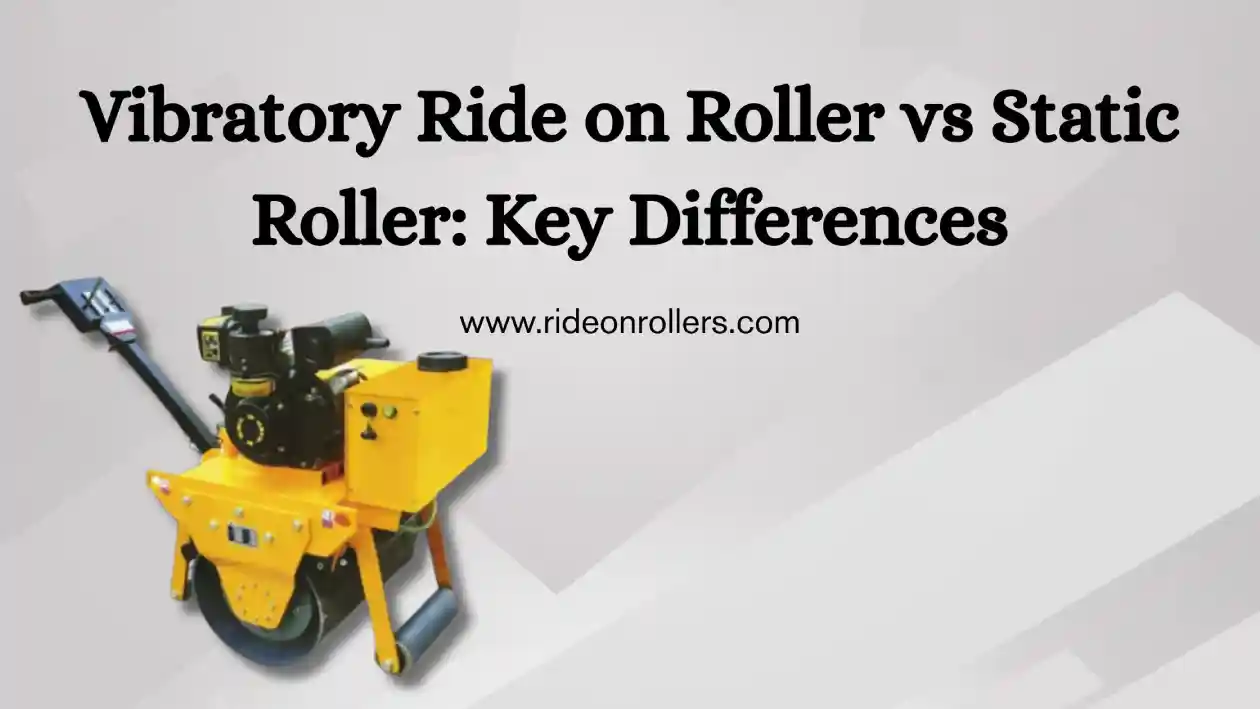
Introduction
Rollers are essential construction machines used to compact soil, aggregate, asphalt, and other suitable materials. Choosing between a vibratory ride-on roller and a static roller depends on the material, required density, project size, site conditions, and desired productivity.
Although both machines use drum weight to compact materials, their primary compaction methods are different.
A static roller relies mainly on the machine’s weight, while a vibratory roller combines static weight with dynamic vibration.
Understanding this difference can help contractors select the right equipment for road construction, infrastructure projects, site preparation, and paving applications.
What Is a Vibratory Ride-On Roller?
A vibratory ride-on roller is a self-propelled compaction machine operated from a seated position.
It uses:
- Machine weight
- Vibrating drum
- Controlled forward/reverse movement
- Engine-powered propulsion
- Vibratory force
The vibration transfers dynamic energy into the material, helping particles rearrange and achieve greater density when the material and operating conditions are suitable.
Vibratory ride-on rollers can be used for appropriate soil, aggregate, and asphalt applications.
What Is a Static Roller?
A static roller compacts material primarily through the weight of its drum and machine.
Unlike a vibratory roller, it does not rely on a vibrating drum to generate dynamic compaction energy.
Static rollers can be suitable for certain:
- Finishing operations
- Asphalt applications
- Surface work
- Materials where vibration is not appropriate
The suitability depends on the specific roller design and project requirements.
Vibratory vs Static Roller: Quick Comparison
1. Difference in Compaction Method
The biggest difference is how the machines transfer force into the material.
Vibratory Roller
- The drum vibrates while moving across the surface.
- This creates dynamic force in addition to the machine’s static weight.
Static Roller
- The drum applies pressure primarily through its weight.
- There is no intentional vibratory action.
- This fundamental difference affects how each machine performs on different materials.
2. Compaction Efficiency
Vibration can increase the energy delivered to suitable materials during each pass.
This can allow a vibratory roller to achieve required compaction with fewer passes in some applications.
However, fewer passes should never be assumed simply because a roller is vibratory.
Actual performance depends on:
- Material
- Moisture
- Layer thickness
- Roller weight
- Vibratory force
- Operating speed
- Required density
Site trials and quality-control testing should determine the appropriate compaction pattern.
3. Productivity
Productivity is particularly important on large construction projects.
A vibratory ride-on roller can potentially provide higher productivity because:
- It is self-propelled.
- It can cover substantial areas.
- Vibration can improve compaction efficiency.
- The operator works from a seated position.
A static roller may require additional passes depending on the material and required density.
The actual productivity difference varies by machine and application.
4. Soil Compaction
Vibratory rollers are widely used for suitable soil and aggregate compaction.
They can be useful for:
- Subgrade preparation
- Road bases
- Granular materials
- Site development
- Embankment work
Static rollers can also compact soil, but their effectiveness depends heavily on machine weight and soil characteristics.
For granular materials, vibratory compaction is often advantageous because vibration helps particles move into a denser arrangement.
5. Asphalt Compaction
Both vibratory and static rollers can have roles in asphalt work.
Vibratory Ride-On Roller
Can provide both static and dynamic compaction and is commonly used during asphalt paving operations.
Static Roller
Can be useful for suitable finishing and surface-compaction applications where additional vibration is undesirable.
Contractors should select the roller based on the asphalt mix, layer thickness, temperature, project specification, and required surface finish.
6. Operator Productivity
Ride-on vibratory rollers allow the operator to control the machine from a seated position.
This can provide:
- Reduced physical effort
- Easier machine control
- Better visibility
- Convenient forward/reverse movement
- Improved comfort during extended operations
Static rollers may also be ride-on machines, so operator position is not itself a defining difference between static and vibratory rollers.
7. Number of Passes
The required number of passes is one of the important factors affecting project productivity.
A vibratory roller may achieve the target density more efficiently in suitable conditions because it combines static and dynamic compaction.
A static roller may require more passes when static weight alone does not provide sufficient compaction energy.
However, the correct number of passes must be established from project testing rather than using a fixed number for every material.
8. Machine Selection
When choosing a vibratory roller, contractors should examine:
- Operating weight
- Drum width
- Exciting force
- Vibration frequency
- Amplitude
- Engine power
- Operating speed
- Drum configuration
For static rollers, important considerations include:
- Operating weight
- Drum width
- Linear load
- Drum configuration
- Operating speed
- Surface requirements
9. Fuel and Operating Costs
Vibratory rollers require engine power not only for propulsion but also for their vibration system.
Therefore, contractors should consider fuel consumption and operating costs when comparing machines.
However, a higher purchase or operating cost can potentially be offset by improved productivity if the vibratory roller achieves the required compaction in fewer passes.
A proper comparison should therefore consider cost per completed area, rather than purchase price alone.
10. When Is a Vibratory Ride-On Roller Better?
A vibratory ride-on roller may be preferable when:
- Large areas need compaction.
- Dynamic compaction is appropriate.
- Soil or aggregate requires efficient particle rearrangement.
- Asphalt requires vibratory compaction.
- Higher productivity is important.
- Operators need a self-propelled ride-on machine.
When Is a Static Roller Better?
A static roller may be considered when:
- Vibration is unsuitable for the material.
- Surface finishing is the primary requirement.
- The project specification calls for static compaction.
- A particular structure or nearby environment limits vibration.
- The roller’s static loading is sufficient for the application.
The project engineer’s specifications should always take priority.
Shree Shakti Infratech Vibratory Roller Options
Shree Shakti Infratech is a New Delhi-based construction-equipment manufacturer and supplier with road rollers and compaction equipment in its published range.
Its roller listings include:
- Ride-on rollers
- Double-drum rollers
- Walk-behind rollers
- Vibratory rollers
One published ride-on roller specification lists a 9 HP Greaves engine, 30 kN exciting force, 1,050 kg working weight, and soil and asphalt compaction applications.
Other published ride-on configurations include models with 9 HP engines and 800 mm rolling width.
Specifications and availability can vary by model, so buyers should request the current technical datasheet and quotation before making a purchase.
Which Roller Should Contractors Choose?
There is no universal answer.
Choose a Vibratory Ride-On Roller when:
Productivity + dynamic compaction + larger working areas are the priority.
Consider a Static Roller when:
Static loading + controlled finishing + applications where vibration is unsuitable are the priority.
The best choice depends on the material and project requirements.
Buying Checklist
Before purchasing either machine, compare:
- Material to be compacted
- Required density
- Layer thickness
- Operating weight
- Drum width
- Drum configuration
- Vibratory force
- Vibration frequency
- Operating speed
- Engine power
- Fuel consumption
- Site accessibility
- Maintenance requirements
- Spare-parts availability
- Warranty
- Technical support
Conclusion
The main difference between a vibratory ride-on roller and a static roller is the compaction method.
A vibratory roller combines static machine weight with dynamic vibration, while a static roller primarily relies on weight and drum pressure.
For many soil, aggregate, and asphalt applications, vibration can improve compaction efficiency and productivity. Static rollers, however, remain useful where static compaction or finishing is preferred.
Contractors should therefore select equipment based on material type, required density, project size, site conditions, machine specifications, and project engineering requirements rather than assuming that one roller type is always superior.
For businesses evaluating a Ride On Roller Manufacturer, Shree Shakti Infratech’s published roller range provides configurations that can be compared with the specific requirements of the project.